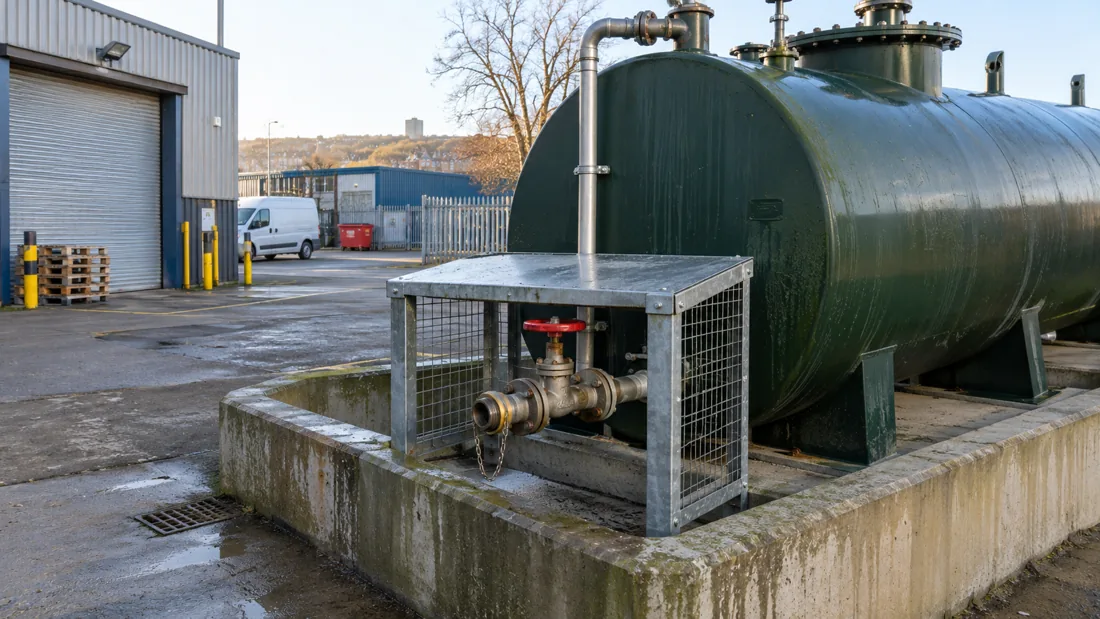
What Foam Filling Is For
Tank foam filling is a possible permanent closure method for an assessed redundant vessel that will remain in place. It can be relevant where excavation would be particularly disruptive or where access is constrained by existing structures. It should be chosen as part of a decommissioning plan, rather than simply because filling sounds easier than removal.
The work concerns the tank's internal void after appropriate preparation. It does not extract the steel shell, remove contaminated ground outside it or make every future development suitable. A retained tank is still a feature that the landowner and future contractors need to know about.
Assess Retention Before Selecting A Material
Start with the tank's position, construction, capacity and previous contents. An accurate site plan is especially useful when only an access chamber is visible. Explain why excavation is difficult and what will happen above or beside the tank after closure.
The Environment Agency's underground tank guidance includes hydrophobic foam among the materials used for making retained tanks safe. It also makes the environmental acceptability of permanent retention a condition of the decision. The material is only one part of that wider assessment.
Discuss the proposed end state with the environmental adviser and any project engineer before booking. If the tank is near future foundations or lies beneath a vehicle route, those uses need to be considered explicitly. Do not interpret a filling proposal as approval of ground bearing capacity or a substitute for structural design.
Preparation Comes Before Filling
Remaining fuel, water and sludge need a defined handling plan. A tank cannot be described as ready merely because it has stopped supplying usable fuel. Compartments, low points and connected pipework may retain material after ordinary pumping has ceased.
Specialists determine how the vessel is isolated, cleaned and made suitable for the chosen closure method. Atmosphere-related hazards and any need for entry belong in the risk assessment. A filling operation should never be used to hide uncertainty about what remains inside.
Where product might be recovered, agree its destination before it is removed. Unsuitable fuel and cleaning residues need classification and appropriate waste handling. The cost and programme depend partly on those quantities, so an honest contents estimate is more useful than a claim that the tank is empty.
Confirm The Whole Void Can Be Addressed
Capacity information helps estimate the material requirement, but old records can be incomplete. Internal compartments, unusual shapes and inaccessible sections need investigation as part of the method. Send any drawings or previous survey information that may reveal the vessel's arrangement.
The provider should explain the access needed for preparation and filling, and how completion will be recorded. Existing openings may not give the access required for every stage. Do not open covers or create new holes yourself in an attempt to make the job easier.
For buried installations, identify the fill, vent and supply lines as well as the tank. Decide which components will be removed and how any retained parts will be dealt with. The scope needs to prevent the appearance of an active fill point remaining after the storage has been permanently retired.
Site Access And Future Works
Filling may avoid excavating the complete vessel, but it still requires a practical working position and a route for equipment. Provide the distance from vehicle access to the tank opening, any steps or restricted gateways and any areas where hoses would cross occupied routes. Include limits on delivery hours.
If groundworks are planned nearby, agree the sequence with the principal contractor or project manager. A tank recorded on a sketch without reference points can be difficult to locate later. Use a site plan tied to identifiable features and retain the dimensions and depth information that has been established.
If future removal is likely, discuss it now. Material introduced during filling can affect subsequent handling and disposal, so the cheapest apparent closure today may not suit the longer-term plan. Our decommissioning guide helps compare the intended end states.
Compare Like-For-Like Quotations
The tank's void volume, preparation requirements, residual contents and access all affect foam filling cost. Material specification and delivery arrangements also matter. A price based on a nominal capacity may change if the vessel proves to have a different internal arrangement.
Ask whether cleaning, waste collection, line treatment and completion records are included. Environmental investigation and making good may be separate. Confirm how the provider will handle a tank found to be unsuitable for the proposed method after preparation.
Include your deadline and the reason for it, such as a property transfer or a new construction phase. The assessment and any required agreement come before the filling date. Do not schedule structural work on the assumption that the retained tank has already been accepted for the proposed use.
What To Send And What To Keep
Send the postcode, a marked plan, known capacity, previous product and an estimate of what remains. Useful photographs show the access chamber from outside, nearby structures and the equipment route. Mention previous leaks or environmental reports and the intended future use of the surface.
Agree a completion record describing the tank, location, preparation and filling method, including the quantity of material used where recorded. Keep the relevant waste documents and any environmental assessment with it. The record should make clear that the tank remains in place.
For a sale or lease, pass the retained-tank information to the people preparing the property records. A filling record describes the operation carried out, not a blanket certificate that the land is uncontaminated. Retaining that distinction helps future decisions about excavation and redevelopment.
Tank Foam Filling Questions
Does Foam Filling Remove Contaminated Soil?
Tank foam filling treats the prepared vessel internally and does not remove contaminated soil around it. Evidence of leakage needs its own environmental assessment and, where necessary, investigation or remediation. Keep those decisions separate from the filling scope so completion of the tank work is not mistaken for a clean-site finding.
Can A Filled Tank Be Built Over?
Building over a filled tank needs project-specific engineering and environmental advice. A foam-filled void does not automatically provide a suitable foundation or prove a surface can take new vehicle loads. Tell the designer that the tank remains, provide its records and confirm the proposed end use before choosing the closure method.
Describe Your Site.
Tell us what is there, what remains inside and what you need the finished space or system to do.
Enquire About Tank Foam Filling