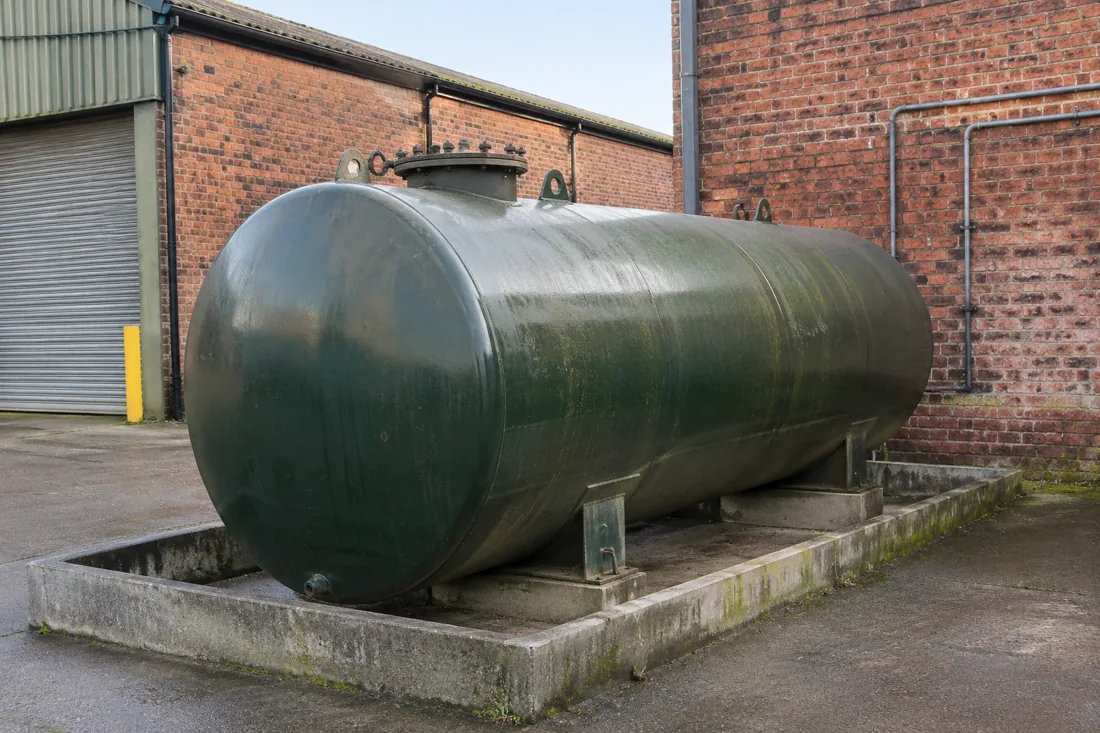
Start With The Space You Need Back
Removing a fuel tank is more than collecting an unwanted vessel. An old dispenser tank may still connect to a fill point across the yard, while a heating tank can feed pipework concealed inside the building. The scope needs to identify what leaves, what stays and who is responsible for each remaining connection.
Tell us whether you want an empty footprint, a retained concrete base, a replacement installation or ground ready for the next contractor. Bund demolition, excavation and reinstatement should be named separately in the quotation. That avoids discovering late in a redevelopment that the tank has gone but its infrastructure still obstructs the next trade.
The Route Out Decides The Method
A wide yard does not automatically mean a straightforward lift. Ground bearing conditions, crane reach, overhead lines and the position of nearby buildings all influence the equipment choice. A lorry also needs a route to arrive, set up and leave without trapping other deliveries.
For indoor tanks, photograph doorways, corridors, changes of level and any steps between the vessel and the loading point. Drawings can help establish whether the tank was installed before the building was completed. Do not remove walls, disconnect pipework or open the tank to make access easier before a specialist assessment.
A sectional removal needs its own working area and handling route for the pieces. Cold cutting is a method choice, not permission to cut a tank that still contains residues. Where a lift is required, HSE's LOLER guidance explains the need for competent planning, suitable supervision and safe execution.
Deal With Remaining Fuel Before Removal
An approximate fuel level is useful even when the tank has been unused for years. The gauge reading may not account for water or sludge at the bottom, so usable product and waste need to be assessed separately. Unknown contents should be declared rather than guessed from the tank's former use.
Recoverable fuel may be transferred to suitable storage if its condition and the receiving system allow it. Fuel that cannot be reused needs an appropriate waste route. Pumping distance, tanker position, temporary storage and the volume of residual material can change both cost and the time on site.
If the tank still supplies heating, plant or a generator, agree the shutdown with the person responsible for that system. A replacement fuel arrangement needs its own scope. Removing the old tank should follow confirmation that the supported operation can be taken out of service.
Controlled Preparation And Removal
The work sequence normally separates site set-up, isolation, fuel recovery, residue removal, cleaning and the final removal operation. Site-specific risk assessments and method statements should reflect the actual contents and surroundings. Permit arrangements need to match the building's own controls.
A tank that appears empty can still release dangerous vapour from retained material. HSE's tank hot-work guidance explains why apparently empty containers remain hazardous. Atmospheric checks and any gas-freeing requirements belong in the specialist method, rather than being replaced by an assumption that age or ventilation has made the tank safe.
Underground work also needs an environmental scope. If soil or groundwater contamination is suspected, arrange the investigation and its ownership before excavation proceeds. Removing the vessel does not by itself resolve historic leakage beneath it.
What Changes The Quotation
Tank size and material affect handling, but access can be the larger cost driver. Compare the proposed method, lifting equipment, cutting requirements, fuel recovery and waste quantities rather than tank capacity alone. Restricted hours, inductions, traffic management and repeat visits should be clear allowances.
A quote should say whether redundant fuel lines, the remote fill cabinet, bund and base are included. Ask how unexpected contents or contamination will be treated as a variation. If other contractors are waiting for the space, make the required handover condition part of the written scope.
Send A Useful Removal Enquiry
Send the site postcode, tank dimensions or capacity, construction and last known contents. Include a wide photo of the whole tank, close views of connections and supports, and a sequence showing the complete route to the collection vehicle. Photos can be supplied by reply once the enquiry has been acknowledged.
Add the estimated fuel left, what the tank supplies, available shutdown dates and your normal delivery hours. Mention nearby drains, overhead obstructions and any previous leak or inspection report. Take photographs only from positions you can safely access without opening covers or climbing on the tank.
Records For Your Project File
Agree the handover schedule before work. Depending on the method, it can include the work record, disposal confirmation, relevant waste transfer or hazardous waste consignment documentation and a gas-free record where applicable. The waste classification determines the document, rather than every material automatically being treated in the same way.
Keep the final scope and photographs with the property or asset file. If a vessel remains below ground, the project is not a complete tank removal and its retained position should be recorded. See our tank decommissioning guidance when permanent closure is being considered without full excavation.
Fuel Tank Removal Questions
Can A Tank Be Removed From A Basement?
Basement tank removal can involve cutting the prepared vessel into manageable sections when it cannot pass through the existing openings. The survey needs the whole handling route, including stairs, door sizes and loading access. Cleaning, isolation and atmospheric controls still apply, and any building alterations must be agreed separately.
Does Tank Removal Include The Fuel?
Fuel handling for tank removal needs to be included expressly in the scope. State the approximate quantity and whether you want usable fuel retained for another system. Water, sludge and unsuitable product may need separate waste handling, so a tank-only collection price does not describe the whole job.
Describe Your Site.
Tell us what is there, what remains inside and what you need the finished space or system to do.
Enquire About Fuel Tank Removal