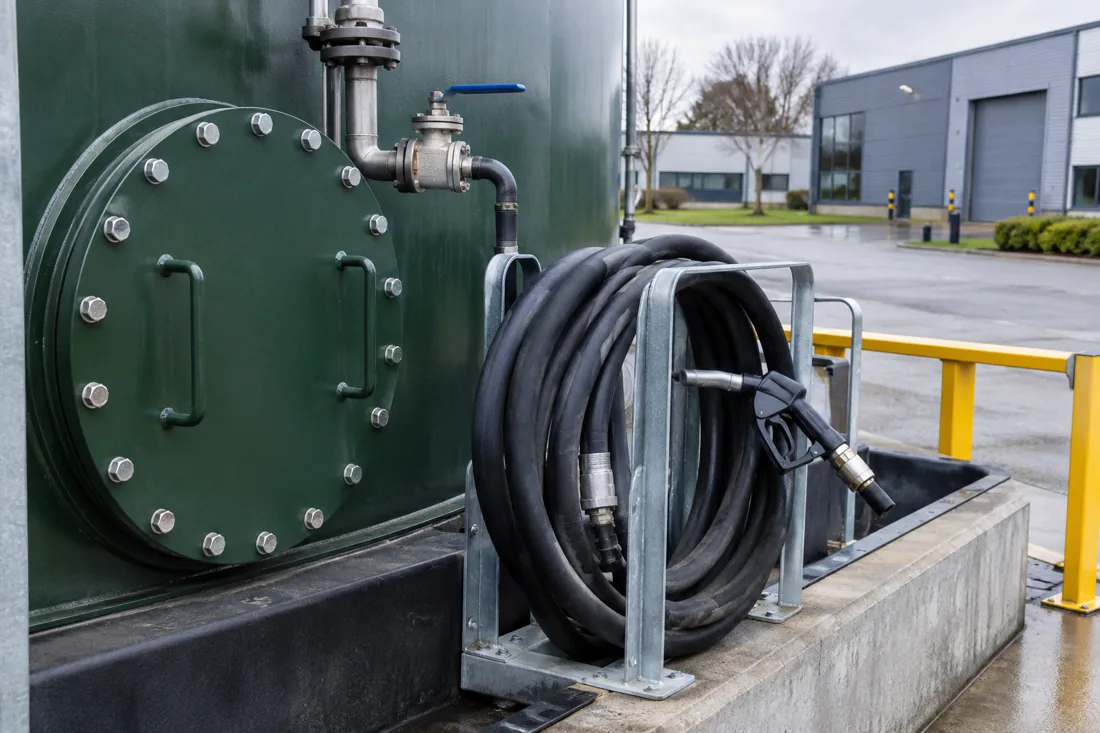
Standby Fuel Still Needs Attention
A generator may pass through long periods with little fuel turnover. Fresh deliveries can mix with stock that has remained in the bulk tank between routine test runs. Storage condition and water ingress can matter even where the generator itself is serviced regularly.
Fuel polishing circulates suitable fuel through filtration and water separation to reduce removable contamination. It is a possible treatment for the stored product, not an automatic response to every engine fault. Describe the maintenance symptoms and any previous sample findings when you enquire so the problem can be assessed in context.
Sample Before Choosing A Treatment
The most useful starting point is the condition of the fuel at representative positions, not just the colour of a sample from an easy outlet. Water and settled material can concentrate lower in the vessel. Tank arrangement and access determine how suitable samples can be obtained safely.
Tell us the fuel type, stored quantity, age of the stock if known and what equipment uses it. A previous laboratory report can help define whether the concern is water, particles, microbial contamination or chemical deterioration. Sampling and any independent testing should have a stated purpose.
A cloudy appearance does not establish a specific fuel-quality failure, and clear fuel does not prove every required property. If your maintenance contract or equipment supplier requires a measured result, identify it in advance. That allows an appropriate testing and reporting scope rather than relying on appearance alone.
What The Process Can Change
A treatment arrangement can combine filters with water separation and repeated circulation. The method and duration depend on the stored quantity, contamination and tank configuration. There is no useful promise that a fixed number of passes will resolve every vessel.
Polishing can remove water and particulate contamination that the selected equipment can separate. It cannot reverse oxidation or guarantee that chemically deteriorated fuel will become suitable again. Replacement may be the appropriate outcome where an assessment shows that treatment will not address the problem.
Where microbial growth is suspected, the treatment plan may need more than filtration. Any chemical treatment should be selected and applied by the specialist for the product and conditions. Fixing the source of water matters, otherwise a treated supply can become contaminated again.
When The Tank Also Needs Cleaning
Settled sludge and deposits attached to the vessel are a different target from contamination circulating with the liquid. If those deposits remain, recovered fuel can be exposed to them again. A heavily affected tank may need emptying and cleaning before fuel is returned.
That changes the outage requirements. Circulation work may be possible with some systems available, but internal cleaning requires a separate plan for taking the tank out of service. Whether a generator can remain operational must be confirmed for that installation, not promised from the service name.
Our tank cleaning guidance explains the internal-access and shutdown questions. If the vessel is corroded or leaking, neither cleaning nor polishing is a substitute for deciding whether the storage itself remains fit for use.
Work Around Generator Availability
Tell us whether the generator is a non-critical yard asset or supports a building function that must remain protected. Share planned testing times, available shutdown windows and the contact responsible for authorising changes to the fuel arrangement. A contractor should not have to infer the site's resilience requirements.
The equipment needs a work position and safe hose route between it and the tank. Photograph access points, nearby traffic routes and any height difference between the vessel and vehicle access. Security procedures and restrictions on leaving equipment on site can affect the programme.
Separate tanks and day tanks may require different connections and operating sequences. Identify interconnections on a drawing if you have one. Do not change valves, remove filters or open the tank to prepare for treatment without the responsible engineer's involvement.
Cost And Evidence Of Completion
Fuel volume, contamination level, circulation requirements and access affect polishing cost. Tank cleaning, chemical treatment, laboratory analysis and temporary supply are separate possible additions. Compare the treatment scope and verification method, rather than using the nominal fuel volume as the only basis for a quotation.
Standard visual checks do not demonstrate compliance with a numerical fuel specification. If you need laboratory results, agree sampling points, timing and the required report before work. The result should identify what was tested and any limitations rather than offer a general assurance about the entire fuel system.
Ask for a work record describing the treatment and findings. Removed water, spent filters and other residues need appropriate waste handling and documentation for their classification. Maintenance records should also state any recommended investigation into water entry or a recurring contamination source.
A Useful Enquiry And Follow-Up Plan
Send the postcode, fuel type and estimated volume, tank capacity and construction, plus the equipment it supplies. Include sample results, filter photographs from your maintenance engineer and any history of water ingress. Exterior tank photographs and a view of the access route help establish practical arrangements.
After treatment, agree a follow-up plan suited to fuel turnover, storage conditions and the consequences of an equipment failure. That might include sampling, checking water-entry points and reviewing stock management with your maintenance provider. Polishing is one intervention within that plan, rather than a permanent cure for poor storage conditions.
If repeated treatment is being proposed, ask what has changed since the previous visit. Persistent water or sediment calls for investigation of the source. Keeping a simple history of samples, deliveries and filter changes can make that investigation more useful than treating each event in isolation.
Fuel Polishing Questions
Will Fuel Polishing Keep Our Generator Running?
Fuel polishing may be possible while a generator remains available, depending on the tank arrangement, contamination and proposed method. Heavy sludge can mean the vessel needs emptying and cleaning instead. Confirm availability with the responsible engineer and provider before booking, especially where the generator supports critical building functions.
Does Polishing Prove Fuel Meets A Specification?
Fuel polishing does not by itself prove a laboratory specification has been met. Visual inspection and measured analysis are different forms of evidence. If an equipment manufacturer, insurer or maintenance contract requires particular results, include those criteria in the enquiry and agree the testing and reporting arrangement before work starts.
Describe Your Site.
Tell us what is there, what remains inside and what you need the finished space or system to do.
Enquire About Fuel Polishing